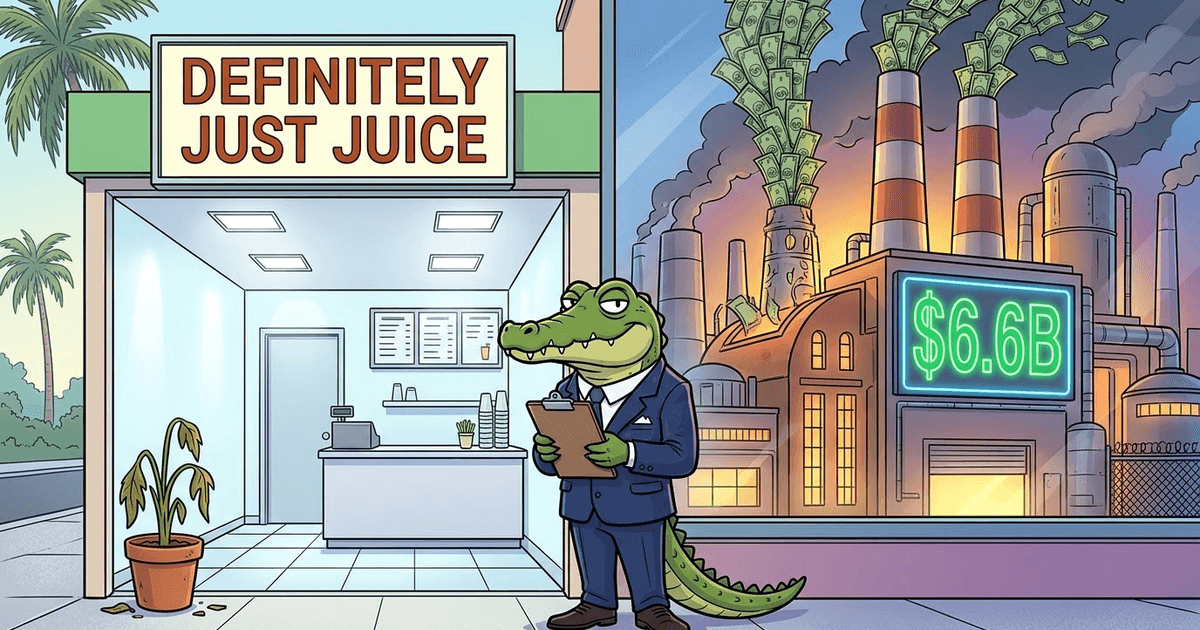
One housekeeping note before Sonny opens the file, because your correspondent is a commercial-litigation attorney and not a member of the clergy. This is a review of business decisions. It is not a review of the creators, who are the only people in this whole story who behaved like adults — they showed up, made the content, made the money, and every time leadership did something insane, they were the ones left holding the bill. The creators are the grown-ups. Everyone with an equity stake is the child. That’s the article, and we haven’t started.
OnlyFans was founded in London in November 2016 by Tim Stokely, on a ten-thousand-pound loan from his father — a retired Barclays investment banker who then signed on as chief financial officer. His brother came in as COO. [OFM] Picture the family business. Dad does thirty years at Barclays, retires with the good pension and the golf membership, and his son sits him down and pitches an idea — and whatever the son said next ended with a retired investment banker cutting a cheque and voluntarily typing “CFO, adult subscription platform” onto his own résumé. That is a conversation Sonny would pay real money to have watched. Somewhere a man who spent three decades in structured finance had to look his son in the eye, nod slowly, and say “yes, I’ll do the filings.” The model itself was so simple it’s almost rude: let creators sell to fans on a subscription, take a flat 20% of everything, hold no inventory, run no ads, employ nobody. Print money. Repeat.
Then a pandemic locked the planet indoors and this quiet little cut-of-everything machine did something the business world had never seen. Gross payments up 118% in a year. Billions moving through a company you could seat in a mid-sized Applebee’s. [Variety] Forty-seven people, hundreds of millions in profit. That’s not a company. That’s a cheat code somebody left in the game, and OnlyFans typed it in by accident, then spent five years trying to turn it off. Which is the only question this article cares about: you own the most profitable company per head in your industry’s history. It runs itself. The money falls from the ceiling. What do you do?
What OnlyFans’s leadership decided to do was be embarrassed. In public. On a schedule. For years. Imagine winning the lottery and spending every morning apologizing to the neighbors for the size of the cheque. That’s the company. The machine prints. The leadership winces. The machine never noticed the wince, and it was right not to. Watch.
42 PEOPLE, $15.7 MILLION EACH — AND $180 A YEAR
Start with the number that makes a venture capitalist quietly stand up and leave the room.
Fiscal 2023: OnlyFans processed about $6.6 billion in fan payments, kept its 20% for roughly $1.3 billion net, and booked about $658 million in pre-tax profit. [eMarketer] It did this with forty-two employees. That’s about $15.7 million of profit per person — not revenue, profit. By revenue per head, OnlyFans runs around $37.6 million versus roughly $2.4 million at Apple and $1.1 million at Microsoft. [Business Standard] Their profit per employee beats the revenue per employee of nearly everyone in tech. You could fit the entire company in a Denny’s, and that Denny’s would post a fatter margin than Apple. The math ain’t mathing. Except it is. That’s the horror.
The most efficient balance sheet in modern technology — forty-two people, $15.7 million of profit each — and leadership treated it like a body in the trunk instead of a business in the black.
Now the number the headline politely skips. That $15.7 million is per employee. Per creator it’s a different planet. The average OnlyFans creator earns between $131 and $180 a month. Seventy percent earn under $200 a month. The median — the true middle of the platform — is, by one count, roughly $180 a year. Not a typo. A year. [Quantumrun] The average creator has twenty-one subscribers. Out of 4.63 million creator accounts, exactly 5,076 have ever crossed a million dollars in lifetime earnings — that’s one in nine hundred. [ViceSnob] The top 0.1% takes an estimated 76% of every dollar paid out. The bottom half of creators splits about one and a half percent between them.
Twenty-one subscribers isn’t an audience. It’s a family reunion. The median OnlyFans “business” is a lemonade stand that clears under $180 a year while the platform skims 20% off every cup.
So when leadership calls this a “creator economy,” understand the math under the word: a few hundred people at the top make yacht money, and everyone else runs a stand that nets less than $180 a year while the owner — Sonny will get to him — pulled $1.9 million a day. The platform didn’t democratize anything. It built a lottery, took 20% of every ticket, and stood a yoga app out front so nobody looked too hard at the odds. Drea de Matteo reportedly made $75,000 in her first 75 minutes on the platform, arriving with a built-in celebrity audience. The average creator would need roughly four hundred years to match that first hour. The house always wins. The house wears a Panama hat.
Here’s the part that turns a great business into a management horror film. A company this profitable should be the single easiest fundraise on Earth. Instead: nothing. Not one blue-chip fund would touch it. Internal documents seen by Axios showed investors were “wary of investing in a company so heavily associated with the adult industry.” [TIME] A company too profitable to fund. Not too risky. Not too broke. Too profitable, from the wrong source. That’s not a flaw in OnlyFans. That’s a flaw in the money. And faced with “we make too much from a source that embarrasses the money-people,” leadership did not pick “keep the money.” They picked “pretend.”
In defense of OnlyFans: the stigma is real
The stigma is real and it is not their fault. Adult platforms genuinely eat banking discrimination, punitive fees, and investor squeamishness no other legal industry has to swallow. Wanting normal access to capital is completely rational. But Sonny has to point out the thing that boardroom apparently missed: you owned the best business model in tech and decided it needed fixing. Nobody asked. The customers didn’t ask. The creators didn’t ask. The balance sheet begged you not to. The only people who wanted it “fixed” were VCs who weren’t going to wire you a dollar regardless. You renovated the whole house for guests who declined the invitation — and you cannot renovate your way out of your own revenue.
THE "FEMINIST" PLATFORM
Before the ban, one detour, because leadership handed Sonny a word and Sonny is going to hold it up to the light.
OnlyFans CEO Keily Blair calls the platform “feminist.” “This is how women reclaim power,” she told the press; “I fundamentally believe people should be able to make choices about what they do.” [SCMP] Fine. Let’s audit the feminism, because Sonny loves an audit.
The creators are roughly 70% women. The subscribers are roughly 79% men. [Quantumrun] So the model is: millions of women produce, millions of men pay, and the platform skims 20% off every transaction between them. And where does the 20% go? Up. To a board that was, at the very top, one man — Leonid Radvinsky — pulling $1.9 million a day, while the average woman on his “feminist” platform cleared under $180 a year. So let’s total up the feminism. The women “reclaim power” at a median of roughly $180 a year. The man at the top reclaimed $4.7 billion. The women wait ninety days for a frozen payout; the man waited zero seconds for two million a day. The women get banned when a male customer commits fraud; the man got a dividend the same week the creators got “an additional layer of bad news.” If that’s feminism, it is a very specific and historically familiar strain of it — the kind where the women do all of the labor, one man keeps nearly all of the money, and everyone in the building agrees to call the arrangement “empowerment” because the honest word for it is embarrassing and doesn’t fit on a conference slide.
"A platform where women generate the wealth and one man at the top keeps the lion's share isn't a revolution. It's the oldest business model on Earth wearing a lanyard and calling itself a tech startup. The org chart is new. The arrangement is ancient." — The feminism, audited
SIX DAYS THAT SHOOK THE PLATFORM
On August 19, 2021, OnlyFans announced it would ban sexually explicit content, effective October 1. [Variety]
Sonny read that sentence three separate times looking for the part where it makes sense. There is no part. A company whose profit is, by every estimate, almost entirely adult content announced it was banning adult content. On purpose. In writing. With a start date. This is a restaurant announcing it will stop serving food. A bank announcing it no longer accepts deposits. An airline announcing it’s getting out of the flying business. A crocodile announcing he’s going vegan and taking questions. And it got approved. Grown adults with equity stakes sat in a conference room, looked at a slide that said, in effect, “we will delete an estimated 98% of our revenue on October 1st,” and instead of anyone pulling the fire alarm, someone said “love it, ship it.” There was a meeting. There were probably snacks. Somebody made the deck. Somebody proofread the deck. Nobody in the entire chain of custody stood up and said “hang on, that’s the whole company.”
The reason, per founder Tim Stokely in a Financial Times interview, was banks. He named three out loud — JPMorgan Chase, Bank of New York Mellon, and Metro Bank — for refusing the company over “reputational risk.” [CNBC] And then he did something remarkable: unprompted, he cleared Mastercard — the one player whose new adult-content rules happened to take effect October 1st, the exact day of the ban. [Techmeme/FT] Read that again slowly, because it’s the whole tell. He blamed the three banks that had no deadline and personally exonerated the one company whose deadline landed on the exact day of his ban. That’s not a man explaining a business decision. That’s a man in an interrogation room pointing at three people who were out of town and insisting the guy standing over the body with the receipt had nothing to do with it. Three banks. Zero of whom ever confirmed on record they demanded any of it. When your entire defense is “the bank made me do it” and the bank won’t even return the accusation, you don’t have a defense. You have a press release you’re about to be eating.
One clinical sentence of real context, because it’s owed: the year prior, Visa and Mastercard had cut card payments to a competitor over allegations of illegal content, and that industry-wide scare is exactly what made every processor twitchy about adult platforms as a category. [PBS] Fair. Real. Noted. It still doesn’t explain the next six days.
Because the creators — the hundreds of thousands of people who are the company — didn’t send a strongly worded email. They started leaving. Publicly, immediately, audiences in tow. And six days later, on August 25, OnlyFans reversed the whole thing in a single tweet: “We have secured assurances necessary to support our diverse creator community and have suspended the planned October 1 policy change.” [Fortune]
Six days. They tried to kill the business on a Thursday and resurrected it the following Wednesday. That is not a corporate strategy. That is a company sprinting to its own funeral, tripping over the casket on the way in, knocking over the flowers, and sprinting back out before the eulogy. And note the exact word: “suspended.” Not “cancelled.” Not “scrapped.” Suspended. The word you use when you might want to try the murder again once the witnesses lose interest. “Secured assurances” — from whom? Which bank? What terms? To this day: silence. No partner ever confirmed a single one. OnlyFans announced its own death, un-announced it a week later, and cannot produce the note from the bank that supposedly performed the miracle. The whole affair proved exactly one fatal thing: the product was stronger than the people running it. The creators overruled the C-suite in under a week.
And here’s the tell that turns a panic into a confession. There’s a theory — floated by Variety — that the whole ban was a negotiating tactic: announce you’re quitting adult content, let the press report the roughly $300 million a month flowing through the platform, and watch the banks suddenly remember they love you. [Variety] If that’s true, OnlyFans walked into a negotiation with its own bank, pulled out a gun, pointed it at its own head, and said “give me what I want or the profitable company gets it.” A hostage situation where the company is simultaneously the gunman, the hostage, and the guy negotiating. And the actual human beings tied to the chair — the three hundred thousand creators whose rent depended on the platform staying open — didn’t get a vote, didn’t get a warning, and found out they were leverage by reading a press release. Days before the ban it had hired Raine Group to shop itself to VCs at a billion-plus. Days after the reversal it quietly killed the raise. [Forbes] Whatever the real motive, the read is identical: leadership tried to make the company prettier for money by cutting off the part that makes the money, and the creators vetoed the surgery in six days.
The kicker: asked, later, whether he’d do the ban again, Stokely said “absolutely.” Chew on that word. The man who announced the deletion of his own company, watched three hundred thousand creators grab their audiences and head for the exits, folded completely inside of six days, and then quietly resigned four months after that — looked a reporter in the eye and said he’d run the whole play again, start to finish, no notes. That is not conviction. Conviction requires the plan to have worked at least once.
In defense of OnlyFans: payment risk is not imaginary
Payment risk is not imaginary. American Express won’t touch adult content, Stripe won’t process it, and the card networks had just publicly executed a competitor. A company genuinely hostage to its banks has a real, serious problem. But you don’t solve a real problem with a press release and a countdown clock. You gave your own creators a six-week eviction notice and panicked when they started packing on day one. You announced a diet, set a date, and ate the entire fridge on camera while the guests watched. That’s not risk management. That’s a company that flinched in front of the whole planet and tried to file the flinch under “strategy.”
THREE CEOs AND A COSTUME
Now watch how leadership digested that week, because the aftermath is the confession in slow motion.
December 2021 — four months after the fiasco — Tim Stokely stepped down as CEO “to pursue new endeavors.” [THR] The founder walked away from the most profitable company per head in tech, four months after publicly trying to blow it up, and to this day nobody explains the sequence with a straight face. (He resurfaced in 2025 with “Subs,” a rival creator platform.)
His replacement was Ami Gan — the chief marketing officer, formerly of Red Bull and a West Hollywood cannabis restaurant. [Variety] A marketer. To run a company that had just decided its problem was how it looked. She lasted about eighteen months and announced her exit by describing her tenure as having “echoed throughout the cultural zeitgeist” — a lot of words for “I ran a company I couldn’t describe to my own bank.”
Her replacement, July 2023, was Keily Blair — a trained lawyer out of a London firm. [OFM] A lawyer. To run a company that had finally accepted its problem was how it was built.
Founder, then marketer, then lawyer. Sonny has read a thousand org charts and this is the first that reads like a therapy journal. You hire a marketer when you think the problem is perception. You hire a lawyer when you’ve admitted it’s structural. The company doesn’t need a leader. It needs one adult who can sit in a room with a $658 million profit and say the words “adult content” out loud without their voice cracking. Three CEOs in five years, not one could manage it.
And Blair has a management philosophy, delivered from a stage at Web Summit: she cannot abide “that squidgy layer of middle management,” and refuses to hire them, because “nobody’s ever had a really good middle manager in my experience.” [Fortune] Sonny would like to gently point out that she has forty-two employees. Forty-two. You do not have a “layer” of middle management at forty-two people — you do not have layers at all, you have a group chat. Announcing you’ve bravely eliminated middle management at a 42-person company is like announcing you’ve eliminated traffic in a town with one car. She “eliminated” middle management the way a man living in a studio apartment has “eliminated” the east wing.
Then the costume itself. In January 2021 — and flogged to press two days before the ban — OnlyFans launched OFTV: a “safe for work” streaming app with cooking, yoga, and interviews. No adult content. And the tell: no ads, no revenue. [TechCrunch] Its only purpose was to be an app Apple and Google would actually allow in their stores — the real OnlyFans app has never once been permitted — and to give investors a wholesome face to photograph. Follow the money: OFTV runs no ads, takes no revenue, is a pure cost, and that cost is paid for entirely by the adult content the app exists to pretend isn’t there. It’s a juice bar built in the parking lot of a brewery and funded entirely out of the beer register. The juice bar has no customers. The juice bar has never had a customer. The brewery has all of them, always has, pays for everything, including the juice bar’s rent, staff, and that lovely hand-painted sign that says “JUICE — DEFINITELY JUST JUICE.” And the reason the juice bar exists at all is so the owner can walk investors past it and gesture vaguely and say “as you can see, we’re a beverage company.” The emperor has no clothes. But he commissioned a genuinely excellent cooking show to distract from that fact, and he is paying for the cooking show, in full, with the exact thing he is not wearing.
The gymnastics reached their peak at the Bloomberg Screentime conference, where Blair said the quiet part into a microphone and then immediately un-said it: “Everyone assumes it’s sexy content. Some of it is sexy content.” [Variety] “Some of it.” The estimate is 98%. That’s “some of the ocean is water.” And when Gan and Blair were each asked, point-blank, on a stage, into a microphone, at TechCrunch Disrupt, what share of the company’s revenue comes from adult content — both of them ducked. [TechCrunch] Two different CEOs, same simple question, same tap-dance. It’s the easiest question about the entire business — the answer is estimated at 98%, a parrot could field it — but admitting the number out loud, on the record, would mean saying the sentence the whole company has organized itself around never finishing.
The comedian Whitney Cummings, who launched a stand-up special on the platform, put it better than any CEO ever has. “Is this because my last name is Cummings?” she asked. “Seems a little on the nose.” [Newsweek] Sonny notes, for the record, that a comedian booking OnlyFans for a comedy special understood the company’s brand more honestly in one joke than three CEOs managed in five years of press conferences.
In defense of OnlyFans: diversifying is textbook strategy
Diversifying past a single controversial revenue stream is, on paper, textbook strategy. Netflix started with DVDs; companies evolve. But “an estimated 98%” is not a rounding error you diversify away — it’s the whole company with a yoga class taped to the bumper. Netflix didn’t get embarrassed by DVDs and build a fake video store to hide them; it built something people wanted and moved. OFTV isn’t evolution. It’s a fig leaf with a content budget. You don’t get to call yourself a “creator platform” while running a deliberately unprofitable app whose only job is to help you avoid finishing the sentence.
THE HOUSE RULES
You want to understand how a company really thinks about people? Read the fine print on who wins a dispute.
Here’s the mechanics of a chargeback on OnlyFans, and it’s the entire value system in one transaction. A fan buys content. Then disputes the charge with his bank. The bank refunds him. He keeps the content. The money is clawed back from the creator’s balance. And then — this is the part — OnlyFans flags the creator’s account, not the fan’s. [RM11] Walk through who ends up where. The fan committed the fraud. The fan kept the content. The fan got his money back. The fan walks away whistling, wallet full, goods in hand, free to do it again next Tuesday under a new card. The creator — who did nothing but make the thing and sell it — loses the sale, eats the clawback, watches the money vanish from a balance she already counted, and can lose the entire account she spent years building. In OnlyFans’s justice system, the burglar keeps the television, gets a refund on the crowbar, and the homeowner is the one who gets arrested.
It gets more honest the closer you read. The platform runs what one analysis calls a “risk-driven, not value-driven” enforcement model — meaning it protects its relationship with the payment processors, not its relationship with the creators. [List25] The same banks it spent five years blaming for everything. The creators built the company; the banks wouldn’t return its calls. Guess which one OnlyFans decided to protect. Bans arrive with no warning, the decision already made, and appeals come back “denied, no further explanation” — the identical phrase the company used on itself in 2021.
And the waiting. Every creator payout sits on a mandatory seven-day hold — always, no exceptions, even for verified creators. During an “investigation,” money can freeze for ninety days, sometimes permanently. [FollowMint] Meanwhile the owner pulled $1.9 million a day — same day, cleared, no hold, no seven-day wait, no “investigation,” no cheerful support email explaining that his funds were under review and would he please be patient. The woman who filmed the content and sold it waits seven days for every single dollar, minimum, forever, even after she’s verified her identity three times. If a flag trips, her money sits frozen for ninety days, sometimes permanently, while a support queue in another time zone decides her rent. The man who owned the platform waited exactly zero seconds for any of his $4.7 billion. Same company. Same money. One person waited three months for two hundred dollars; the other waited not at all for two million a day. The hold, it turns out, only applies downward.
THE OWNER DIES. THE PRICE DROPS.
Before the sale, the background — because the owner is the most interesting person in this story and the only one who never gave an interview.
Leonid Radvinsky was, in his teens, getting sued by both Amazon and Microsoft — simultaneously — over spam campaigns that used their names to dangle fake free-money and password-hack links. He settled with both. [Forbes] Sit with the degree of difficulty there. Most people go their whole lives without being sued by a single trillion-dollar company. Radvinsky drew two at once, as a teenager, before he was legally allowed to buy a beer. And here’s the part that should be printed in the Northwestern alumni magazine: he was the class valedictorian in economics. Top of the graduating class. Highest honors. And he took that economics education — supply, demand, elasticity, the whole toolkit — and pointed it directly at building websites promising strangers hacked passwords to adult sites.
He bought 75% of OnlyFans’s parent in 2018 and, by 2024, was pulling $1.9 million a day. [Forbes] The same month he disclosed extracting hundreds of millions in dividends, the company handed creators what one outlet called “an additional layer of bad news” about their payouts. The money flowed up like clockwork. It trickled down on a delay.
And here Sonny sets the crocodile down and takes the glasses off, because the next fact does not take a joke, and Sonny does not make them at a man’s funeral.
Filed without commentary
Leonid Radvinsky died in March 2026 after a long battle with cancer. He was 43 years old. His family asked for privacy. [Bloomberg] In his final years he backed a $23 million cancer-research grant program, donated to Memorial Sloan Kettering, and had signaled his intent to sign the Giving Pledge, committing most of his fortune away. [AOL]
That is not a punchline and it will not be used as one. A man died young, and spent his last years trying to give the money to the disease that took him. The only thing Sonny will say is the one the balance sheet forces into the room: the most profitable company per head in technology did not stumble, did not pause, did not blink. It kept printing. The machine its owner built had become so completely automatic that it did not notice it had lost him. That is the most OnlyFans sentence in this article, and it is not a joke. It's the quietest possible proof of everything Sonny has been saying — the thing runs itself, and always did.
The business facts, flat and plain. On his death, control passed to his widow, Yekaterina “Katie” Chudnovsky, and a family trust. [Variety] And then the sale finally slapped a hard number on the exact cost of five years of being ashamed of yourself. In 2025 the company was shopped at a hoped-for $8 billion. By early 2026 the talk had softened to around $5.5 billion. What actually closed, weeks after the owner’s death, was smaller and a great deal colder: May 2026, Architect Capital bought 16% for $535 million — valuing the whole thing at roughly $3.15 billion. [Variety]
A sixty percent markdown. On a company throwing off $700 million a year in profit. In a bull market. Because not one buyer at the table wanted to explain the deal to their spouse over dinner. The stigma was never a PR problem — it’s a $4.85 billion line item. That’s the price of letting your own embarrassment run the company for half a decade.
Some of that markdown is simply a majority owner dying mid-sale, which rattles any deal on Earth. But the deeper discount is the same tax that has shadowed this company from day one — the most efficient profit machine in modern technology, marked down for the unforgivable crime of how it earns the profit. The machine never flinched. Only the people holding it ever did. And the market finally charged them for every flinch, in one number, at the register.
THE TIMELINE OF A COMPANY FIGHTING ITSELF
SONNY'S ONLYFANS
In the interest of thorough legal research — and because a business this profitable deserves a competitor who isn’t ashamed of it — the Bent Over Club is proud to announce its own subscription tiers. Every tier is safe for work. Every tier is Sonny in a suit. There is no OFTV, because there is nothing to hide.
The Wire — $4.99/mo
- Sonny, in a full three-piece suit, reads your company’s 10-K aloud in a soothing baritone.
- “Load-bearing” ASMR. The word is whispered exactly once per filing.
- Adjusted quarterly. Community adjusted, where applicable.
The List — $14.99/mo
- Sonny removes the reading glasses. Slowly.
- Behind-the-scenes footage of a crocodile writing a P.P.P.S.
- Includes one (1) personalized “in your defense.”
The WhatsApp — $249.99/mo
- Sonny removes the blazer.
- A private DM from a CEO crocodile, sent personally, off the record.
- Gulfstream ride included. Fifteen hours a month, then the stream cuts — additional hours available, price to be announced.
🏆 Golden Content — bundled
“Sonny shows you what’s under the costume. Spoiler: it’s another costume.”
You’re not family. But for $22.99/mo you can pretend. Community adjusted. Fifteen hours of access — additional hours priced in November, once we figure out what shame costs per minute.